Showing posts with label Johnny Appleseed. Show all posts

Tuesday, July 28, 2026

Johnny Appleseed in Vermilion During the War of 1812?

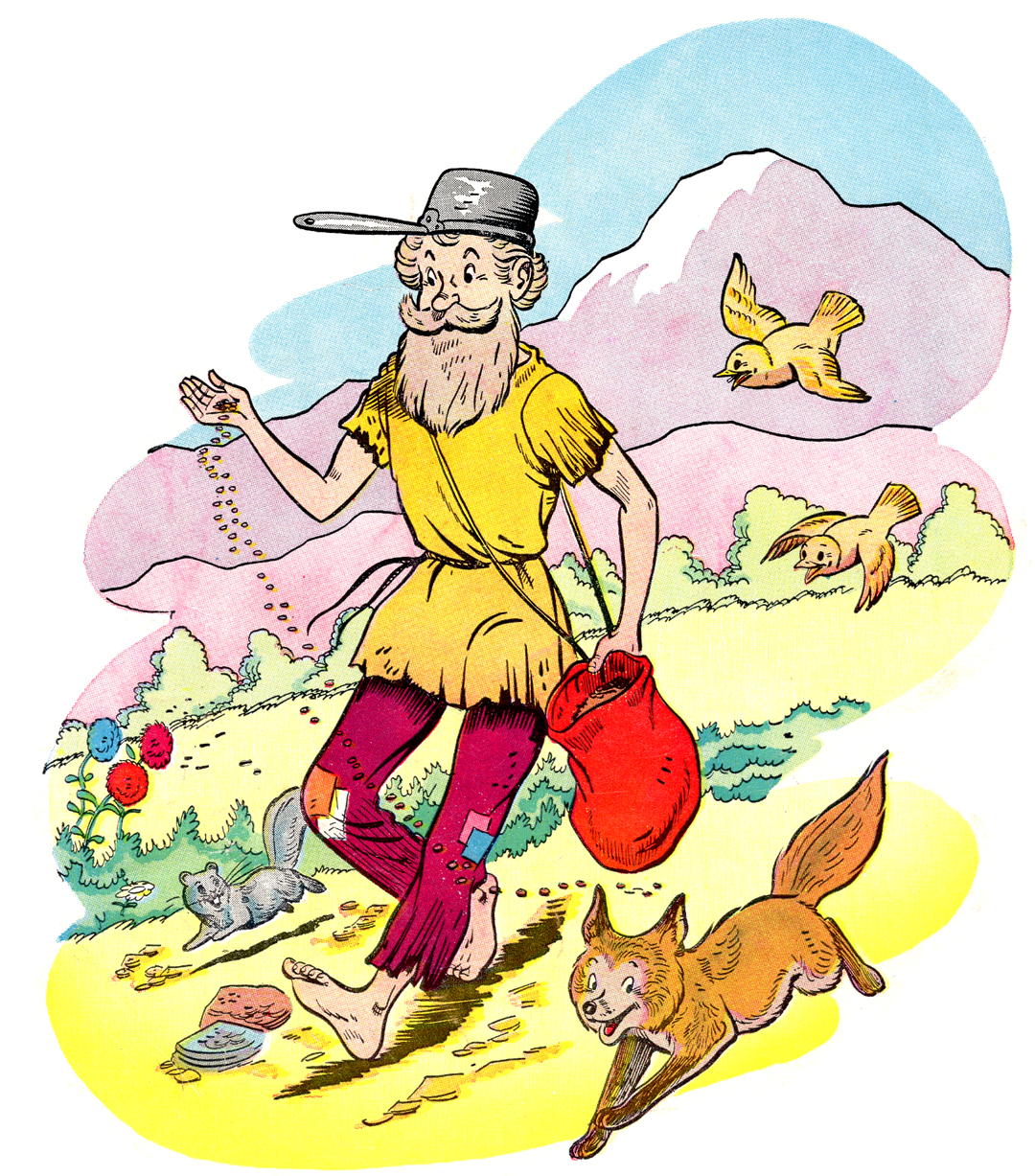
An early illustration of Johnny Appleseed
Over the years the Lorain Journal has published some great anniversary issues – extra large editions chockfull of historical articles and odd bits of local lore. For years, many of these special Journals could be found in the Lorain Public Library upstairs in the Local History area, laminated (making it hard for local bloggers to photocopy or take a photo of) and hanging on wooden rods on a rack. They might still be up there, although there seemed to be fewer the last time I used them.

These special issues usually celebrated a special anniversary, such as the founding of Lorain, but the July 26, 1939 issue commemorated the 60th Anniversary Edition of the Lorain Journal and Times-Herald.

And here's a page from that edition with interesting pieces covering a variety of topics. 

One is about Johnny Appleseed, who supposedly played a part in the War of 1812. According to local legend, "He is supposed to have stayed on the lake shore bluffs at Vermilion during the battle being waged at Put-in-Bay, near Sandusky, and listened to the sound of the guns.

"He was able to differentiate between the British and the American guns, the story says, and when the final volleys were from American guns he knew the British fleet was silenced and the day won for Commodore Perry and his Lake Erie fleet."

It's a nice story but probably pure hokum. But I like it. Plus, Johnny Appleseed has been a regular topic on this blog. I've driven all over Ohio photographing the various monuments commemorating his legacy.

Other articles include: a story about hunting in Lorain County during pioneer times, with special attention paid to wolves; an article about early Eaton Township settler Turot F. Chapman, a veteran of the  War of 1812; a look at the railway which passed through Lorain County beginning in 1851; and the story of Capt. Jabez Burrell and Capt. John Day, pioneer owners of Sheffield Township and how they set about exploring the land they purchased and selecting lots for themselves and friends; and other tidbits and nuggets of local history.

Monday, November 30, 2020

Johnny Appleseed Monument Dedicated – Nov. 1900

Back cover illustration from Classics Illustrated Junior comic book, Johnny Appleseed (1955)
Although it seems like it's Christmas time already, it’s really still fall for several more weeks. And fall always makes me think of apples.
I’ve been enjoying many of the popular and newer varieties of apples during the last two months. These included Honeycrisp, Pixie and – my favorite – Evercrisp, of which I bought two bags at Miller Orchards.
And while enjoying all these apples, I naturally thought of Johnny Appleseed, who planted many an apple tree in Ohio. The monument honoring him in Mansfield, Ohio was dedicated one hundred and twenty years ago this month, on November 8, 1900.
The original monument in Mansfield
Here’s a picture postcard view.
In the decades since its dedication, the original monument began to show its age, thanks to the weather and vandalism. 
Thus the decision was made to replace the shaft and stone with the inscription with new ones, and move the monument to a new location in another Mansfield park. The ’new’ monument was dedicated in September 1953.
(For a well-written history of the monument with terrific photographs, click here.)
I paid a visit to the monument in Mansfield a few weeks ago. A sign at the entrance to South Park lets you know you’re close.
And here’s the monument.

Unfortunately, it looks like this stone will need to be replaced as well.
And what happened to the original stone? It’s in a museum in Mansfield.

Anyway, here is the Mansfield News-Journal’s coverage of the original monument ceremony from its November 8, 1900 edition. It includes many details of the life and death of Johnny Appleseed. (Sorry, but it was too much for me to transcribe, so you’ll have to click on it and zoom in for a readable view.) 
A few weeks later, one Ohio newspaper did an interesting follow-up with its own written portrait of Johnny Appleseed using a different source for its information. The story paints an image very different from the skinny character wearing a pot for a hat in the Walt Disney cartoon. In this Bucyrus Evening Telegraph article, it’s not a pot at all that he wears on his head – it’s something of his own design made of paste board. And instead of being tall and skinny, he’s said to be short and ‘chunky.’ Read all about the life of this unique man in the article (below) from the Bucyrus Evening Telegraph of November 29, 1900.

****
JOHNNY APPLESEED
Father of the Apple Orchards
AROUND THIS LOCALITY
One of His Trees Still Lives and Thrives Near Bucyrus
PEOPLE HERE HAVE SEEN HIM
History of a Noted Character Lately Honored With a Monument at Mansfield

 
Though a monument has been erected to the memory of “Johnny Appleseed,” in Richland County, there still thrives on the Dan McMichael farm east of Bucyrus, a living monument in the form of one of the apple trees, which was grown from the seed sown by this eccentric individual, and still bears fruit. It is probably the last living apple tree planed by Johnny, but it is healthy and bears luscious fruit annually. The father of the apple orchards of Ohio, will be remembered by many people still living in Bucyrus, and other parts of Ohio, Indiana and Pennsylvania, and he was one of the most noted personages of pioneer history. Jonathan Chapman was his name, but he was seldom ever known by any other name than his soubriquet “Johnny Appleseed,” which he received from the fact that he made a business of sowing and distributing seeds each year, and in this way cultivating apple trees from the seed which he sowed in different localities. He was known in Ohio as early as 1811. He had little nurseries all through Ohio, Pennsylvania and Indiana. He was first seen in Ohio in 1806. He was going down the river with two canoes lashed together, well laden with apple seed which he had obtained at the cider presses in Western Pennsylvania.
Johnny Appleseed was a very remarkable personage, identified particularly with the early history of Richland County, and played an important part during the war of 1812. He was born in 1775, at or near Springfield, Mass. In the early years of the past century he removed with his father and family to Marietta, Ohio. Johnny’s father, Nathaniel sr., moved from Marietta to Duck Creek. Johnny returned to Pennsylvania, and here it was he began the nursery business and continued it on west. He often visited his father at Marietta and Duck Creek, and gathered seeds there. In connection with the apple tree business, he employed much of his time in sowing seeds of different medical herbs in the localities which were destitute of them. His main objective was to equalize the distribution of these plants so that every locality would be supplied with a variety, dog fennel, pennyroyal, catnip, horehound, mullin, rattle root, and in fact every other plant which he supposed to be medicinal. He had little nurseries all through Ohio, Pennsylvania and Indiana.
If a man wanted trees and was not able to pay for them Johnny took his note, and if the man ever became able and was willing to pay the debt the money was accepted thankfully, but if not it was well with Johnny. Some times he accepted articles of wearing apparel instead of money. One coat in particular presented a fine appearance, although a bit unfitted for the rough wear it received. It was sky blue, light, very firm and soft, made in the prevailing Quaker style with two rows of silvery looking buttons as large as silver dollars. This bit of finery was at one time the wedding garment of a very wealthy young Quaker.
Johnny was never known in the least to resemble a fashion plate. He didn’t believe in wearing clothes simply for the purpose of making a fine appearance. He thought if he was comfortably clad, in clothes that suited the weather that was all that was necessary. His head covering was frequently of his own manufacturing. It was of paste board, with the front brim widely extending to protect his face from the sun. It was not a very sightly affair of course, but no one ever thought of laughing at Johnny Appleseed. He was too genuinely liked. His trousers were old and scant and short with a variety of substitutes for suspenders. He never wore a coat except in winter. His feet were knobby and horny and frequently bare. The bosom of his shirt was always pulled out loosely, so as to make a sort of pocket or pouch, in which he carried his books. He frequently wore an old coffee sack for a coat, with holes cut in it for his arms.
Johnny’s family, the Chapmans and their relatives are scattered throughout Ohio and Indiana. Four of his half sisters were living when a memorial was raised to his memory in 1882. The father Nathaniel Chapman was twice married. The children of the first wife were John, Lucy and Petty. The girls married and remained in the east. The children of the second marriage were: Nathaniel, Perley, Persia, Abner (a mute), Mary, Ionathan, (also a mute), Davie and Dolly.
Johnny’s personal appearance was unusual. He was small of stature, heavy set, rather chunky, quick in conversation and restless in his movements. His eyes were dark and sparkling and his hair and beard permitted to attain the greatest length. His clothing was generally more than half worn out before he fell heir to it.
Religiously considered he was a Swedenborgian and one of our early spiritualists. He maintained the doctrine that a spiritual intercourse could be held with the dead, having himself frequent conversations with the inhabitants of the spirit land, two of which of the feminine gender, had revealed to him the consoling news that they were to be his wives in a future state providing he would keep himself free from a matrimonial alliance while on earth. He vowed celibacy and never could be persuaded to pay any attention to the fair sex. He died as he lived a blameless moral man.
The Indians all liked him and treated him kindly, always. From his habits they regarded him as a man above his fellows. He could endure pain like an Indian warrior; could thrust pins into his face without a tremor. So insensible was he to acute pain, that his treatment of a wound or sore was to sear it with a hot iron and then treat it as a burn. He was never known to hurt any animal, or to give any living thing pain, not even a snake. Once, when overtaken by night while traveling, he crawled into a hollow log and slept till morning. In the other end of the log was a bear and her cubs. Johnny said he knew that the bear would not hurt him, and that there was room enough for all.
On the subject of apples he was charmingly enthusiastic. One would be astonished at his beautiful description of excellent fruit. His descriptions were poetic. The language well chosen; it could have been no finer, had the whole of Webster’s Unabridged with all its royal vocabulary, been fresh upon his ready tongue. All the orchards in the while settlements came from the nurseries of Johnny’s planting. Sometimes he carried a load of seeds on an old horse, but more frequently he bore them on his back, going from place to place on the wild frontier, clearing a little patch, surrounding it with a rude enclosure, and planting sees therein. He would frequently carry as much as a bushel and a half of seeds on his back.
In 1838, he resolved to go further on west than Ohio. Civilization was making the wilderness to blossom like the rose, villages were springing up, stage coaches laden with passengers were common, orchards were everywhere, mail facilities were very good, frame and brick houses were taking the place of the humble cabin; and poor old Johnny felt that his field of usefulness would have to be taken up further on. In the intervening years he returned to Ohio many times. His last visit was the same year that he died. In the spring of that year, one day after traveling twenty miles, he entered the house of a friend in Allen county, Ind., and he was as usual cordially received. He declined to eat anything except some bread and milk, which he ate while sitting on the door steps, occasionally looking out toward the setting sun.
Before bed time he read from his little book “fresh news right from Heaven,” and at the usual time for retiring he lay down upon the floor in his usual custom, as he never slept on a bed or coach of any kind. In the morning the beautiful light supernal was upon his countenance; the death angel had touched him in the silence and darkness, and although the dear old man essayed to speak, he was so near dead that his tongue refused its office. The physician came and pronounced him dying, but remarked that he never saw a man so perfectly calm and placid.
****
I’ve written about Johnny Appleseed before on this blog, including this post about his presence in Lorain County, and this one about my pilgrimage to the Johnny Appleseed Educational Center and Museum in Urbana, Ohio. (Unfortunately, many of the links on those ten-year-old posts no longer work.)
****
Panel from Classics Illustrated Junior comic book, Johnny Appleseed (1955)


Thursday, September 30, 2010

Johnny Appleseed Follow-up

As a follow-up to my blog about Johnny Appleseed in Lorain County (back here), I paid a visit to the Johnny Appleseed Educational Center and Museum down in Urbana, Ohio last weekend. It was a fairly long drive on a Sunday afternoon (more than three hours one way!) but it was a must-see for fans of the American folk hero.

The reason I went last weekend was because it was the final day of the Johnny Appleseed's 236th Birthday Celebration and Tree Planting Tour sponsored by American Forests.

I'm really not the biggest tree-hugger around, but I think this is a fine organization, and its Historic Tree Program is pretty unique. It's a cool concept to be able to purchase a tree that is a descendant of a variety of famous ones, including an apple tree planted by the tin pot-wearing pioneer himself, or one of George Washington's red maples found at his home at Mount Vernon.

After a pleasant Sunday drive down there (taking as many back roads as possible), I was given a guided tour of the Museum, which is said to have the largest collection of Johnny Appleseed memorabilia in the world. After seeing it all, I believe it.

Since there are no photos of Johnny Appleseed, it was interesting to see the different representations of him throughout the Museum. Some artists saw him as a tall, gaunt figure; others decided he was a chubby, apple-cheeked guy. His image adorned books, paintings, advertisements, collectible plates and even a comic book. I liked the comic book version best (although he looked like Santa Claus), probably because I hadn't seen one of those Classics Illustrated comic books in a long time!

The Museum also has a nice big chunk of bark (at left) from the last remaining tree planted by Johnny Appleseed on display. The tree still stands in Nova, Ohio. (I guess that's a destination for some future Sunday drive.)

Outside the Museum, there was a small festival centered around the Johnny Appleseed Birthday Celebration, with vendors peddling apple treats and other crafts. I spent some time talking with the owner of The Green Owl, a retail store in Urbana specializing in pottery, jewelry and paper crafts. Here's a link to its online store.

All in all, I enjoyed my trip to Urbana and the Johnny Appleseed Educational Center and Museum. It was a nice way to wrap up my brief odyssey into the world of Johnny Appleseed.

One thing for sure, I've been eating a lot more apples lately!

Tuesday, September 14, 2010

Johnny Appleseed in Lorain County

Visiting a local roadside produce stand over the weekend to get some apples reminded me that Johnny Appleseed is the topic for my article in the September issue of the Black Swamp Trader & Firelands Gazette.

Johnny Appleseed was actually a real person named John Chapman, and he spent a lot of time in Ohio in the early 1800's, particularly around Ashland and Mansfield. He planted many apple tree nurseries in the Mohican area and eventually three monuments were erected in his honor in that part of Ohio, which is the focus of my article.

Chapman covered a lot of turf while planting his nurseries, basically wandering all over Ohio from Steubenville to Central Ohio and eventually over to the Toledo area before leaving Ohio for Indiana. He had some involvement in a few historical events involving frontier violence during the War of 1812.

An excellent book, Johnny Appleseed – Man & Myth by Robert Price notes that many of the legends and actions attributed to the pioneer nurseryman around Ohio cannot be documented.

Here's a good example of such a legend, with a Lorain County angle. The following article appeared in the Lorain Journal on June 21, 1955.

****

Fabulous Johnny Appleseed Legend


Every age and every country have certain fabulous characters in their history whose adventures have been retold so often that they have become almost legendary.

The Western Reserve has such a character peculiarly its own – an eccentric nurseryman and servant of humanity whose exploits were of a peaceful rather than a warlike nature.

His name was Jonathan Chapman. History knows him as "Johnny Appleseed" because he devoted his life to planting young apple trees in small clearings for the benefit of the settlers whom he knew would be cultivating the land within a few years.

Story Recorded
Schools have been named for him, monuments erected to his memory and his story has been recorded in school texts for future generations to read.

He was known as the "Paul Revere of the Western Reserve" through his habit of warning settlers of impending Indian attacks.

Legend says that the settlers in Lorain County during the War of 1812 first learned the Americans won the Battle of Lake Erie through Johnny Appleseed.

He is supposed to have stayed on the lake shore bluffs at Vermilion during the battle being waged at Put-in-Bay, near Sandusky, and listened to the sound of the guns.

He was able to differentiate between the British and American guns, the story says, and when the final volleys were from American guns he knew the British fleet was silenced and the day won for Commodore Perry and his Lake Erie-made fleet.

Tells the News
As soon as the battle was over, Johnny Appleseed hurried eastward along the lake shore, telling every pioneer family he passed that the Americans had defeated their enemies in one of the decisive battles of the year.

Johnny Appleseed was born in New England, spent the last 50 years of his life in the wilderness, combining his apple tree planting with missionary work.

On one ocassion, when settlers near Mansfiefld were threatened by Indians, he carried a message through forests filled with hostile warriors, 30 miles to a garrison in Mt. Vernon. The next morning he acccompanied the soldiers back to Mansfield, a 60-mile trip accomplished in two days.

Johnny started his apple tree planting shortly after 1801 when he went to western Pennsylvania and filled several deerskin bags with apple seeds he obtained at cider mills along the way.

As he went westward, it was his practice to halt, clear away some ground and plant nurseries at strategic places throughout the wilderness.

****

Johnny Appleseed was such a larger than life character in Ohio that it is not surprising that Lorain County would also want to claim a small piece of him. Whether or not the Vermilion legend is true doesn't really matter at this point.  It's a nice story and I'm proud to do my bit to perpetuate it!

And don't forget to stop by the Vermilion Farm Market and pick up your free copy of the September Black Swamp Trader & Firelands Gazette which includes my Johnny Appleseed article.

****

Did you know that you could own your own genuine Johnny Appleseed apple tree?

That's right. The folks at American Forests, the oldest nonprofit conservation organization, have made it possible for you to own an apple tree that is a direct descendant of one planted by Johnny Appleseed himself! It's all part of the American Forests Historic Tree Program.

You see, the last living apple tree planted by Johnny Appleseed still grows on a farm in Nova, Ohio down in Ashland County. (That's it at left.) Johnny used to drop in on the family that lived there in the early 1800's to rest and visit, during his widespread travels around the Buckeye state.

American Forests takes soft bud cuttings from the tree and grafts them to apple root stock, creating a genuine Johnny Appleseed apple tree!

The tree comes with a certificate of authenticity and would make a great conversation and conservation piece for your yard!

To order your Johnny Appleseed tree, click here. (I'm thinking of getting one myself next spring!)

And for an update of sorts on the Nova tree, click here.