Tuesday, November 19, 2024

Battle of the Coffee Giants – November 4, 1964

There must have been a fierce coffee brand war a-brewing back on November 4, 1964. How else can you explain two major brands both unveiling a special promotion in the same edition of the Journal?

First up in the paper on page 27 was this ad for Chase & Sanborn Coffee, announcing a special 100th anniversary company promotion. For a limited time, its coffee came in a cannister designed to look like an "American Drum" 

It doesn't appear to tie in with a specific war, but I'm guessing it more closely resembles a Civil War drum than anything else.

And just a few pages away on page 34 of the Journal, Maxwell House was offering a free coffee pot in which to make its instant coffee.

What, no special Hills Bros. (my parents' favorite) promotion?

Anyway, there doesn't appear to be any surviving Chase & Sanborn drum canisters on eBay. But the drum design must have been a good gimmick, as there are some other coffee cans (including one for Folger's) with the same idea. 

As for Maxwell House, the free pot must have been a long-running promotion, as many of them survived, albeit with slightly different graphics. The drawback of this promotion was that you could peel off the label – turning the pot into a generic one.

Today, both Maxwell House and Chase & Sanborn are still around.  
Maxwell House (owned by Kraft Heinz) is still aggressively marketed, with a great variety of products and blends. Here's the link to its website. 
On the other hand, Chase & Sanborn is part of Massimo Zanetti Beverage USA and has no website of its own, except for an ordering site. Its corporate overlord also owns and markets Hills Bros. and Chock full o'Nuts. Both have nicely designed websites.
Now, don't you feel like having a cup of coffee?

Monday, November 18, 2024

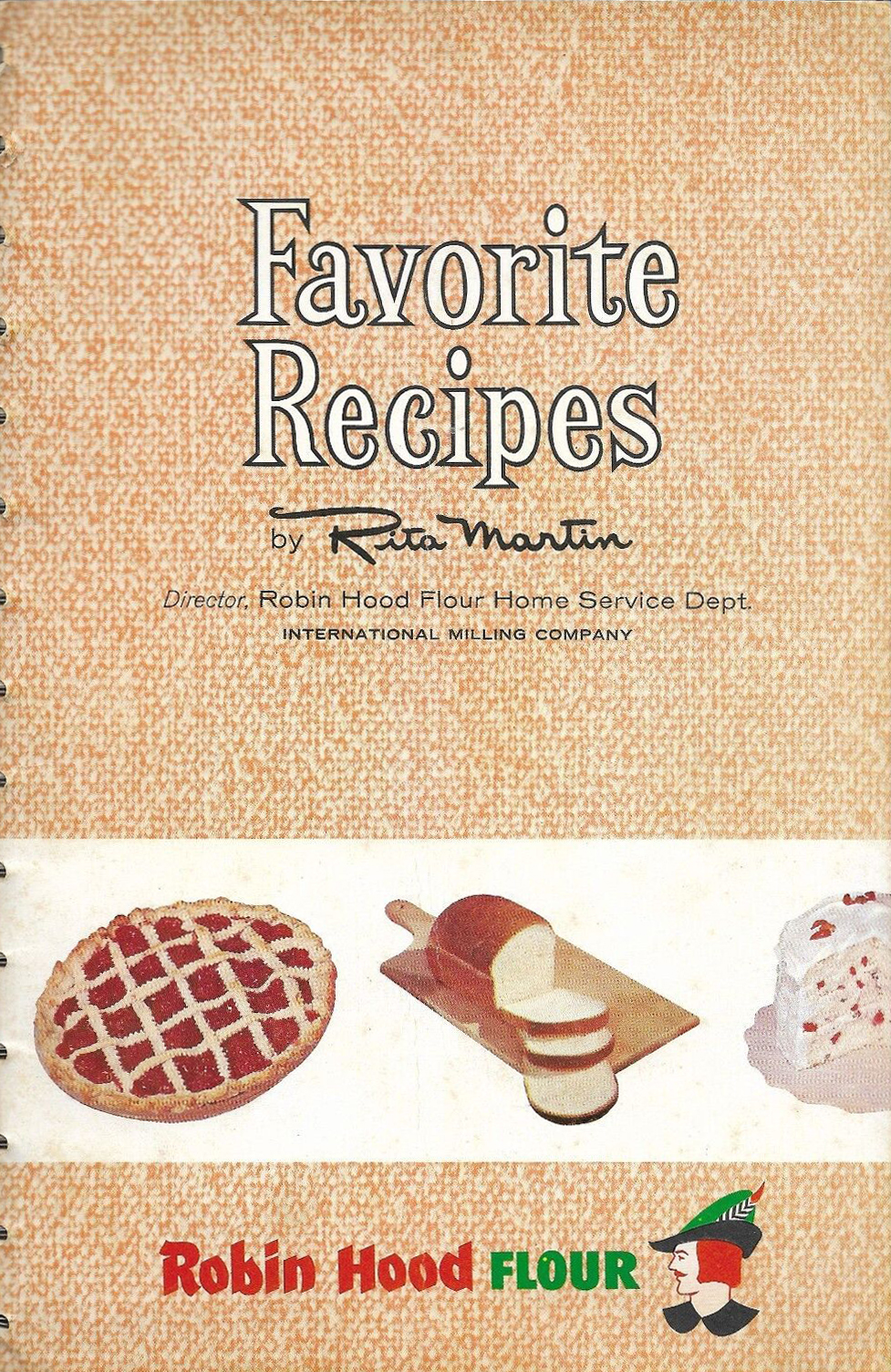
Robin Hood Flour Misses the Target in the States

Robin Hood Flour
has always been a favorite in the Brady household. Mom was loyal to it and insisted on it when she was baking. The other leading brands, such as Gold Medal, just wouldn't do. Even in my own house over the years, Robin Hood was the only brand of flour you would find in our cupboard.

Thus I had a pleasant feeling of nostalgia when I saw the above ad with coupon, which ran in the Journal back on November 18, 1964, and just had to post it. I always liked the graphics on the bag and color scheme (although I'm not sure what the connection is between the Sherwood Forest avenger and high quality baking).

But in recent years, Robin Hood Flour disappeared from local grocery store shelves. And a quick look on the internet revealed that Robin Hood Flour is now a Canadian brand only. What happened, eh?

I reached out to the J.M. Smucker Company (owner of the brand) to find out what the story was, and received a reply the same day. "Thank you for contacting The J.M. Smucker Co. Canada to inquire about Robin Hood®. Unfortunately, this product did not receive enough support and was discontinued in the U.S. It currently is only available in Canada. 
"However, your voice of support is very important to us, and we have let the right teams know that you would like to see our Robin Hood® flour back on shelves in the future!"
I was a little surprised that such an iconic brand – one that has been around for well over a hundred years – would have dwindled in popularity so drastically that it no longer made sense to market it in the States. But I guess there isn't as much baking going on as there used to be, especially in this era in which convenience reigns. 
Here is the link to the Robin Hood Canadian website.
****
The name 'Robin Hood' has been assigned to a variety of products over the years, including clothing, golf balls and grass seed.
Detail from a Peoples Drug Store ad, Lorain Journal Sept. 2, 1948
Sears Ad, Lorain Journal Oct. 9, 1950
Robin Hood Flour first turned up in Journal grocery store ads in the late 1940s. And its first standalone promotional ad appeared on July 11, 1946. It was a contest that was tied in with its sponsorship of a radio program.
A series of ads promoting the brand continued to appear for many years in the Journal, until the mid-1960s. I wonder if that is how Mom got familiar with the brand, tried it and was pleased with its performance?
Feb. 20, 1947
Nov. 17, 1955
Nov. 19, 1958. Note announcement of new package design.
Oct. 18, 1961
April 11, 1962
Dec. 12, 1962
Dec. 9, 1964
June 2, 1965
****
A brand that has been around as long as Robin Hood Flour generates a lot of ads, promotional items and even postcards. Feel free to sift through this gallery, courtesy of eBay.
Grain Elevators at Moose Jaw, Saskatchewan, Canada
Greenville International Mill Elevator
Promotional Cookie Cutters from the 1950s
A 1959 Magazine ad

Wednesday, November 13, 2024

Economy Sales Ad – November 4, 1964

Back in the 1960s, many stores ran Christmas ads highlighting potential gifts in early November.

Why? One of the reasons was that back then, layaway was a very popular payment option. Many families (including the Bradys) utilized it. So making those purchases early made sense.

That's the idea behind the nearly full-page ad above for the well-remembered Economy Sales stores, which ran in the Journal back on November 4, 1964. The ad is nicely divided between toys and gifts for adults.

Economy Sales was the Amazon of its time. It carried a wide selection of items and each store was like a little warehouse. You perused the showroom, decided on your purchase, filled out a little card and submitted it. Then, a few minutes later, your selection came chugging out from the back on a little conveyor belt.

(I've written about Economy Sales several times.)

At the time of the 1964 ad, the Oberlin Avenue location wasn't open yet. It wouldn't hold its Grand Opening until November 1965. So the Lorain store was still out in South Lorain, in the former Lorain Street Railway car barn.

Anyway, many of the toys shown in the ad have survived to this day and are available on eBay. Here are a few of them.
And of course, who doesn't recognize the fruit of Fred Flintstone's loins: Pebbles Flintstone. 

Tuesday, November 12, 2024

Fisher's Ad with Wampum Specials – Nov. 4, 1964


For more than half a century, grocery stores have used a variety of creative tactics to get shoppers to regularly patronize their establishments. 

In recent years, the loyalty card programs have ruled. Giant Eagle, for example, uses fuel discounts at its GetGo stations as an incentive for their card holders to keep coming back.

Back in the 1950s and 60s, Top Value Stamps were popular, and helped Kroger's maintain market share. There were also various programs at other stores in which shoppers could assemble a set of encyclopedias, or even a set of dishes, one each week.

But here's a program that I've never heard of, used by the local Fisher's chain of stores: wampum coins. 

I had originally planned to post the above Journal ad from November 4, 1964 because of the funny illustration of the kid with the apple and the roll call of brand name products. But while reading the ad copy, I saw a mention of Orange Wampum Specials and became curious as to how the incentive program worked.

I found this explanation that ran in the paper on June 20, 1964. It seems that the Orange and Blue Wampum coins were earned by spending money at the store. The coins could then be used as money on weekly specials that were color coded to correspond with them.

In this full page ad from June 18, 1964, we get a look at one of the coins (the Native American is holding one.)

The whole Wampum coin gimmick enabled Fisher's to feature a lot of cartoon Indian clip art in its ads.

July 15, 1964 ad
July 29, 1964

Of course, today the whole Wampum program would be seen as politically incorrect and in bad taste, and rightly so. But in the more innocent times of the early 1960s, after a decade of TV Westerns dominating the airwaves, it was just a way to have some fun while saving money.


Monday, November 11, 2024

Armistice Day 1924 and 1938

One hundred years ago today, World War I had ended a mere six years earlier, and Lorain – and the rest of the world – was observing Armistice Day. Then as now, the Armistice is commemorated at the eleventh hour of the eleventh day of the eleventh month.

Above is the front page of the November 11, 1924, Lorain Journal. As you can see, there is no special header or graphics in honor of the observance.

Under the heading "Nation Turns Back Pages of History," the report from Washington, D. C., notes, "The nation today turned its thoughts back six years to another Armistice Day and paid reverent homage to those who gave their lives on the altar of history.

"Throughout the country memorial services for the dead were held, and patriotic exercises, parades, and other ceremonies appropriately observed the day.

"Two shrines here received thousands of visitors – the tomb of the Unknown Soldier at Arlington and the chapel beneath which lies Woodrow Wilson, war time president.

"President Coolidge led the observance with a pilgrimage to Arlington to pay simple tribute to the Unknown warrior who symbolizes the nation's war lead by laying a wreath on his tomb.

"Congress may be asked in December to take up the matter of declaring Armistice Day a holiday, it appeared here today following President Coolidges's decision that he has no authority to order work stopped in government departments on that day."

(Armistice Day would not become a legal holiday until 1938. And after World War II, November 11th was changed to Veterans Day in June 1954 to honor American Veterans of all wars.)

But getting back to Armistice Day 1924.

In Lorain, according to the article entitled, "Armistice Day is Observed by Vets," Lorain's ex-service men, officials, citizens and school children today joined in observing Armistice Day and the sixth anniversary of the end of the World War.

"Lorain Post, No. 45, American Legion, will hold a military ball at Hotel Antlers this evening. 

"Mullen-Murray Post No. 451, Lorain Veterans of Foreign Wars, J. J. Misco, Commander, will celebrate Armistice Day with a military ball held at the H. and R. dance hall this evening. Carr's orchestra will play."

United Press Staff Correspondent Webb Miller contributed a report from 'the old American battlefront' in which he directly addressed the veterans who fought in the War. "Probably, sometimes today, your thoughts will turn backwards to that day six years ago, with a tug at the heartstrings for the Buddies left behind under the little white crosses and undoubtedly with a strange incomprehensible twinge of homesickness, or whatever that feeling is," he wrote.

"But it is a safe bet that you would not recognize today most of the smashed, deserted villages you marched thru those last few days, chasing the Boche back out of the Argonne. The peasants have come back – about 80 percent of them – and have cobbled up the ruins or rebuilt them and are today busy spreading fertilizer in the fields for the spring crops. Many villages were wiped out and never will be rebuilt. They are only memories, or names on the old war maps."

****

Twenty years after World War I ended, with another world war conflict brewing, the November 11, 1938 front page of the Lorain Journal included one article about the observance, entitled "Anxious World Marks 20th Armistice Day."

"Lorain paused today with an anxious world to reflect on peace and disillusionment on Armistice day, 1938 – 20 years after the "war to end war."

"The 11 a. m. hour of the Armistice passed in the schools without the two-minute period of silence observed in former years. All schools, however, had special Armistice day programs this morning. At Lorain High school, a movie depicted horrors of future wars."

The Journal editorial page contained a special message from the Editor, as well as a commemorative artwork by cartoonist Vernon Greene.

Friday, November 8, 2024

Pete & Millie's Revisited

Pete & Millie's was a popular restaurant located on the southeast corner of West 21st Street and Leavitt Road (where the Family Dollar store is today). It was owned and operated by Peter and Mildred Flontek. As I noted back on this post, it first showed up in the city directory in the 1949 edition. But I found an ad from a year earlier that appeared in the Lorain Journal on Sept. 3, 1948 (below). Like many restaurants at that time, it started out as a seasonal drive-in, with curb service only.

However November 10, 1951, this large ad announcing the opening of their new dining room, which enabled them to be open all year round.

It was quite an ambitious menu, with its 'sensational new crab burger,' along with old favorites like Chicken in a Basket. Note that Restemeier's Potato Chips was the brand sold there.
Courtesy Alan Richer
The year 1952 was a big one, with regular ads running in the Journal. My original post featured ads from late January and early February. These two ads (below) also ran in February, keeping the momentum generated by the new dining room going.
Feb. 12, 1952
Feb. 26, 1952
And then, about two years later, it was all over, with Pete & Millie selling out to the Standard Oil Company. I guess the location was just too desirable for Standard Oil to resist. 

Jan. 21, 1954 Journal transaction
Vic's Sohio Service Station would take over the location. Below is the Grand Opening ad that ran in the Journal on August 20, 1954.